


A note before we start. The series I told you about is coming, just not this week. The first essay is written but it ain’t ready. I don’t hand you work I don’t stand all the way behind. So here’s what I have instead, and it’s something you can use today.
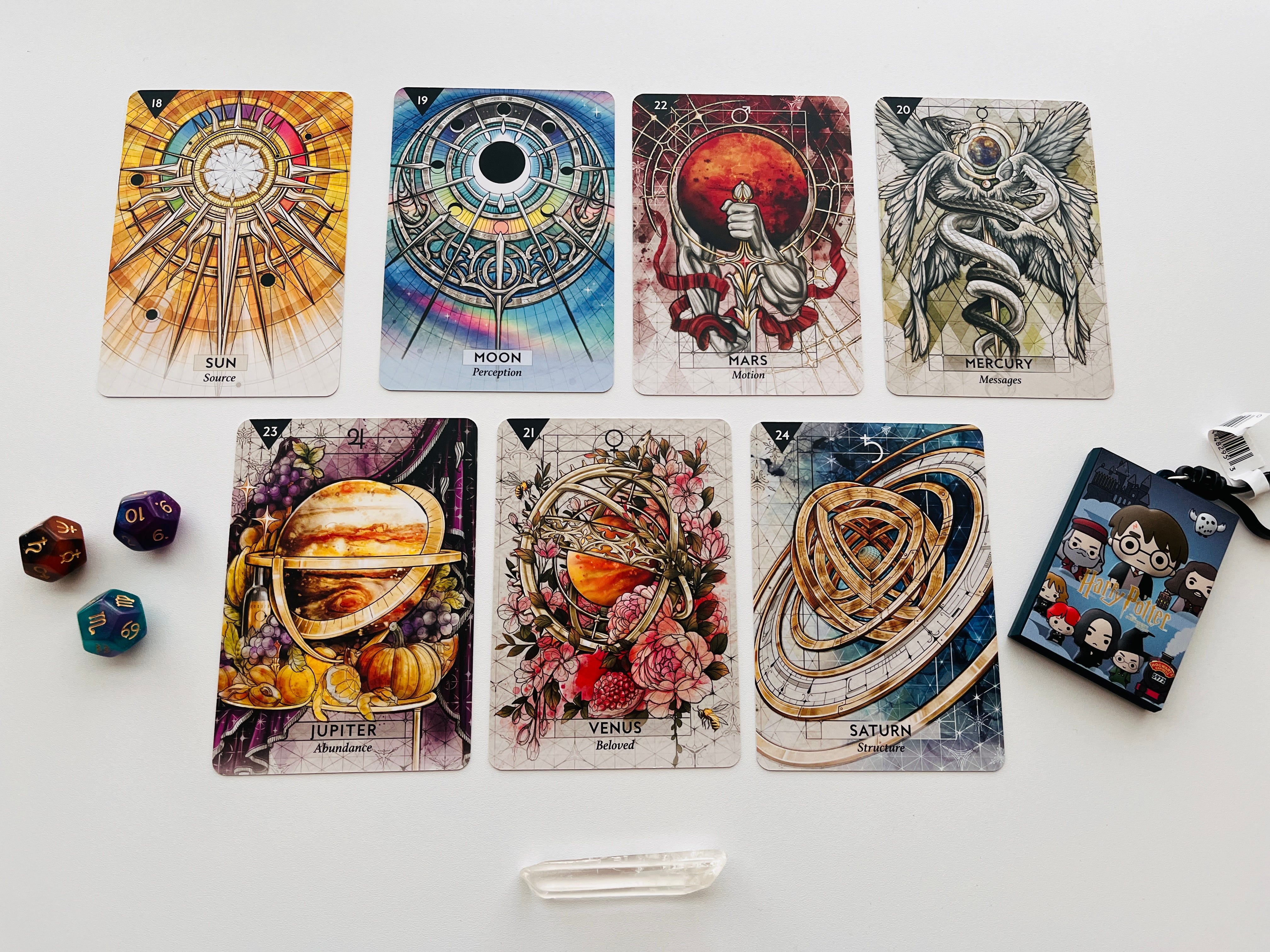
It’s Tuesday. Which means today belongs to Mars. The warlord.
That’s not me assigning the day a mood. It’s the name of the day. Mardi in French, martes in Spanish, both out of dies Martis, the day of Mars. English swapped in Tiw, a Germanic war god, and the war stayed.
So today’s for cutting aka revision.
I read manuscripts for a living. What I see most often is a good writer doing the wrong job on the wrong day, over and over, until she decides the problem is her.
You’re consistent. Same hour. Same project. Same thing being done to it, the way you were taught this works. That’s why you have pages that exist that you can work with.
But you’re running one task across all seven days. So when Tuesday’s brutality shows up on a Monday morning and you can’t make yourself do it, you file it under something being wrong.
Every stall is buying something. Grinding the same job into every day buys you the ability to say you showed up, and showing up is much easier to prove than the thing you were supposed to be making. It’s a defensible position. I’ve watched writers hold it for years. I’ve held it myself.
Different days carry different weather. That’s the spine of this.
The names are the receipts
Before you roll your eyes, think about what you already say out loud without even thinking about it.
The seven classical planets, ordered slowest to fastest: Saturn, Jupiter, Mars, Sun, Venus, Mercury, Moon. Give every hour of the day a ruler in that order. Twenty-four doesn’t divide evenly by seven, so the first hour of the next day lands three places down the sequence. Run it all the way out and you get Sunday, Monday, Tuesday, Wednesday, Thursday, Friday, Saturday, in that exact order. It’s arithmetic. I love a good numbers problem. Somebody did the math a very long time ago and I love that for us.
And the names survived. English kept the Sun, the Moon and Saturn outright. French still holds: mardi, mercredi, jeudi, vendredi. Mars, Mercury, Jupiter, Venus. Between two languages you have all seven, sitting in your calendar app right now.
There’s a whole system of planetary hours underneath this, and today ain’t the day for all that.
The seven
One thing first. A planet never changes its core need. What changes is the strategy you use to meet it. So this isn’t a personality test. The day hands you a need, and you decide what to do with it.
We’ll start with today and go around.
Tuesday. Mars.
We opened here, so I’ll be brief.
Mars needs a challenge. It affirms who you are by putting courage up against something that scares you, and for a Black writer, that’s usually a very honest sentence.
Delete the chapter you’ve been defending since spring. Cut the three pages of throat-clearing sitting in front of your real first line. Kill the character you love who is doing no work in the book.
You already know what needs to go. You’ve known since March. Probably longer.
Mars won’t ask whether you feel ready. He’s a warlord, so he doesn’t care. He offers the energy and the bravery, and Wednesday can clean up behind you.
Wednesday. Mercury.
Mercury’s core need is to understand and be understood.
Wednesday is the mind working in public. The pitch, the query, the newsletter or the email to the agent you’ve been drafting in your head since Sunday. It’s also where you work out the premise: what this project is arguing and why it deserves somebody’s time.
I published on Wednesdays for years and it was fine. I moved to Tuesdays cuz I wanted Mars’s bravery alongside Mercury’s wit. Writing openly about how the publishing industry intentionally harms Black writers takes courage.
Thursday. Jupiter.
Jupiter’s core need is meaning, and it needs a framework to build a belief out of. It expands whatever it touches, including the parts you have wrong.
Thursday is for higher learning. Read the words of your writing ancestors, and study them. Research the thing you’ve been faking. Ask what tradition your book stands in and whether you believe it.
Octavia Butler, in her essay Furor Scribendi, said: continued learning is more dependable than talent. She never had formal training. So she studied on her own, downtown at the Los Angeles Central Library, wandering departments she’d never been in and browsing titles until something caught her. She called it grazing.
That’s the assignment. And Saturday will tell you whether you understood and how much of it you integrated.
Friday. Venus.
Venus’s core need is worth, and she runs it through two channels: what’s beautiful and what’s valuable. She reflects back the value you already hold in yourself.
Which makes Friday a double day, and most writers only run half of it.
The first half is the sentence. Pick one. Read it out loud. Fix what’s ugly and leave what’s strange alone. Art as instruction.
The second half is the money. What you charge. The price of your words. The rate you didn’t push back on. The submission fee you paid to a magazine that’s never published anybody who writes like you. Worth is a number too, and Friday is the day to look at it.
It’s why the Altar letter goes out on Fridays.
Saturday. Saturn.
Saturn’s core need is mastery, and its entire lesson is cause and effect. Saturn teaches that development takes time and there’s no way to shorten that. He’s not taking questions on it either.
Saturday is the container, and the day for the unglamorous question. Where does this actually end? How many chapters, what the last scene is, what the deadline is, written down somewhere with a date attached to it.
It’s also the day you count what you’ve already done.
I’m a child of Saturn. His lessons on structure and deadlines will implant themselves onto your brain if you let them. He can be strict, but he’s a good father.
Everybody skips Saturday, cuz it feels like administration instead of art. Then the project stays open for four years. Forty-seven documents and nothing finished is what happens to a piece that never once met a Saturday.
Sunday. Sun.
The Sun’s core need is to shine and be seen as who you truly are. It sits at the center, and when it’s suppressed the vitality drains out of everything else.
You’ve read a suppressed Sun before. The writing is competent and no one’s home in it.
Sunday is the day you’re fully on the page. The piece you’d write if you weren’t getting paid and no one would read it.
Monday. Moon.
The Moon’s core need is emotional safety. It runs on your earliest conditioning and your automatic defenses, so it’s also where the flinch lives.
You can’t write the truth from inside a flinch. That isn’t willpower. The body won’t hand the material over until it’s safe enough to say it.
Monday builds the safety. Your journal, freewriting, sitting still and the memory you’ve been circling for two years and still won’t put down on paper. None of it gets shown to people.
Real talk: I barely like talking on Mondays, which is why I try with all my might not to schedule meetings on this day.
Skip Monday and the week gets written from your defenses.
Before bed
Look at tomorrow’s to-do list. Pick one thing on it. Ask whether it’s Mars work or Mercury work, cutting or sending, then move it to the day it belongs to.
That’s the assignment.
May you stop reading the wrong day as a flaw in your character.
May you find the one sentence on a Friday that makes the difficult thing worth it.
May you let Tuesday do what Tuesday came here to do.
Essays like this land in your inbox every Tuesday. Free. The series I owe you is coming, and it lands here first.
About the author

High Priestess Lakeisha is the founder of The Story Temple, a spiritual writing sanctuary for Black writers healing their relationship with their voice. She is a developmental editor with close to 10 years of experience across fiction and nonfiction, an initiated priestess, a certified evolutionary astrologer, and a shadow work facilitator. Her editorial roots are in fantasy and speculative fiction, the genre space where she first saw the patterns she would later have language for.
Lakeisha’s work holds craft and spirit as one practice. The Elemental Writing Energetics framework reads the manuscript. The Elemental Shadow Wounds framework reads the architect behind the words (the writer). The Story Temple exists on a single premise: writing is a spiritual practice, and a free sentence is a prayer being answered.
Morrison knocked the gaze off the shoulder. Baldwin showed what the eyes could do once it was gone.