

The magician’s toolkit: Essential story elements
A writer’s guide to elemental story magic.

The Four Elements of Story
As a writer, you are a magician crafting reality from imagination. Your stories are spells woven from four essential elements, each bringing its own power to your narrative. When you master these elements — Air, Fire, Water and Earth — you create stories that don’t just entertain but transform.
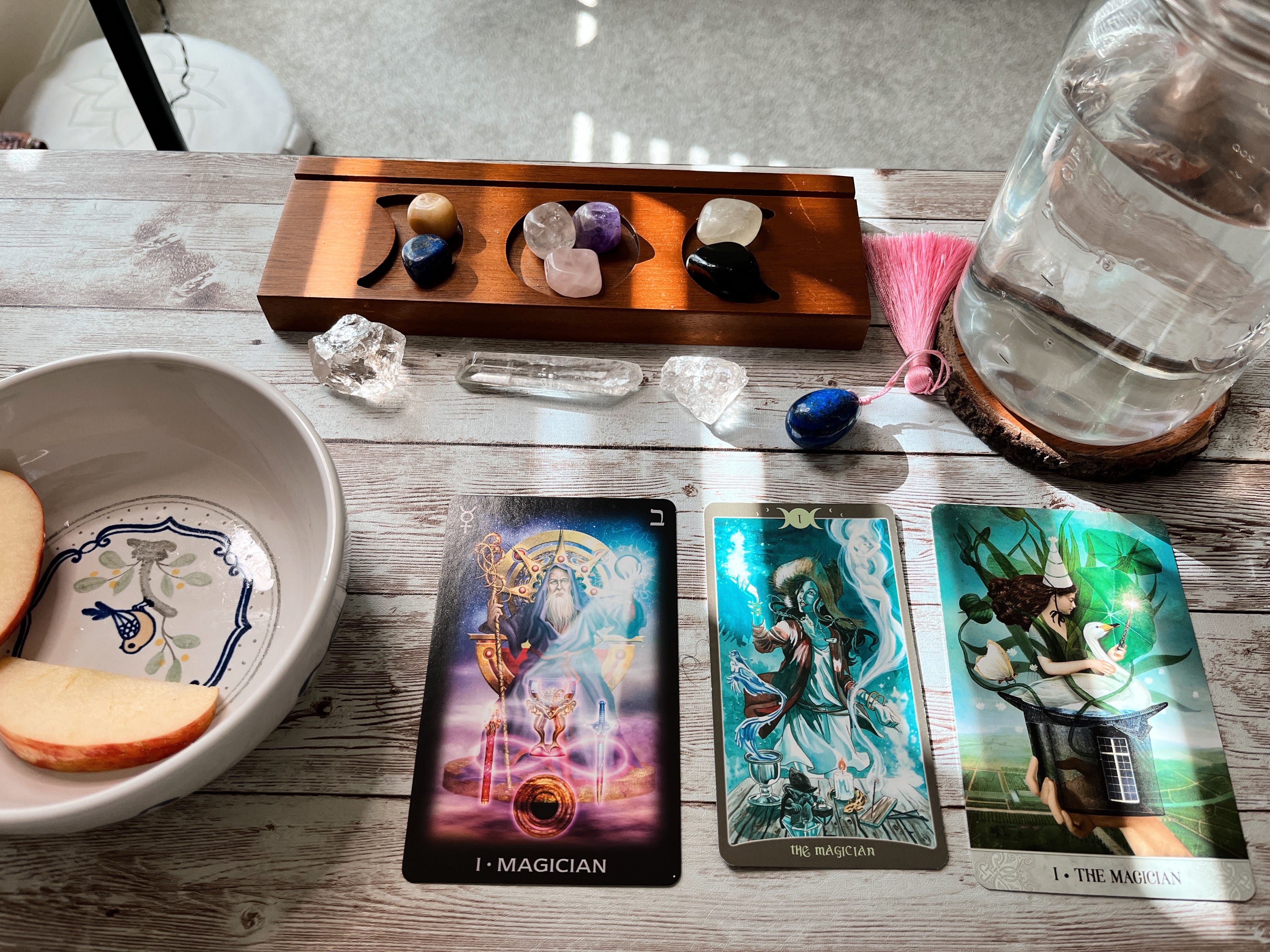
The Magician archetype teaches the importance of mastering our tools. In your writing practice, this means understanding how each element contributes to your story and how they work together. A story missing any element feels incomplete. Too much of any one element overwhelms the others.
This elemental balance is crucial in genre fiction. Each genre has its own elemental requirements:
Fantasy demands strong Air for worldbuilding
Romance needs deep Water for emotional resonance
Thrillers run hot with Fire’s action and tension
Mysteries require Earth’s solid clues and structure
In this guide, you’ll learn how to identify and work with each story element, understand their interactions and create balanced narratives that deeply engage readers.
You’ll discover practical tools for assessing your story’s elemental balance, develop techniques for strengthening weak elements and master the art of weaving elements together. By the end, you’ll have a complete toolkit for crafting stories that resonate on every level. Let’s begin.
The Magician’s Foundation: Elemental Story Theory
Air Element: Ideas and Concepts
You begin your story craft in the realm of Air, where ideas take their first form. This element governs:
Brainstorming and concept development
Initial story seeds
Possibility exploration
Concept refinement
Worldbuilding foundations
Setting development
Cultural systems
Historical background
Magic system design
Power structures
Limitations and costs
Magical consequences
Theme exploration
Core messages
Thematic threads
Symbol systems
Genre conventions and innovation
Traditional elements
Fresh approaches
Genre blending
Air is your element of possibility. When you work with Air, you’re creating the invisible structures that will support your entire narrative. Think of Air as the breath that gives life to your story world. Without strong Air element work, your story might have action and emotion but lack the deeper meaning that makes it memorable.
Consider how Air manifests in your favorite novels. In The Name of the Wind, Rothfuss doesn’t just create magic — he builds an entire system of sympathy with clear rules and consequences. This is Air element mastery at work. The magic feels real because its conceptual foundation is solid.
Working with Air requires you to ask the big questions: What if? Why? How does this work? Each answer builds your story’s conceptual framework. As you strengthen your Air work, you’ll find your stories develop deeper roots and broader branches, creating space for more complex narratives to emerge.
Fire Element: Passion and Action
After Air gives form to your ideas, Fire brings them to life through movement and change. This element governs:
Plot development and pacing
Rising action points
Tension building
Scene intensity mapping
Conflict creation
Internal obstacles
External challenges
Stakes escalation
Character motivation
Driving forces
Decision points
Goal pursuit
Action scene crafting
Movement choreography
Sensory engagement
Time manipulation
Story momentum
Scene transitions
Pacing variation
Tension maintenance
Fire is your element of transformation. When you harness Fire in your story, every scene becomes a crucible where something must change — your character, their situation or the reader’s understanding. Fire demands movement, whether it’s a physical fight scene or an intense conversation that alters a relationship forever.
Look at how Fire manifests in Brandon Sanderson’s Mistborn. Each action sequence isn’t just about the mind-bending metal-based magic; it’s about how the conflict transforms the characters and advances the plot. The best Fire scenes leave both your characters and readers changed.
Working with Fire means understanding the rhythm of tension and release. Too much Fire exhausts your reader; too little leaves them bored. Your task is to kindle the right flame at the right moment, feeding it just enough fuel to keep your story’s heart burning bright without burning out.
Water Element: Emotion and Flow
While Fire drives action, Water creates the emotional current that carries your reader through the story. This element governs:
Character relationships
Emotional bonds
Power dynamics
Trust development
Relationship arcs
Emotional arcs
Character growth
Emotional beats
Mood creation
Inner journey mapping
Scene transitions
Emotional threading
Tonal shifts
Pacing flow
Tension ebb and flow
Narrative flow
Story rhythm
Scene sequencing
Emotional pacing
Seamless progression
Reader engagement
Empathy building
Connection points
Immersion depth
Emotional hooks
Water is your element of connection. It flows between the lines of your story, carrying emotional resonance from one scene to the next. When you master Water, you create stories that don’t just move readers — they transform them. Like a river cutting through stone, Water element work shapes the emotional landscape of your narrative.
Consider how N.K. Jemisin uses Water in The Fifth Season. The emotional devastation of the opening doesn’t merely shock — it creates a current that pulls readers through the entire trilogy. Each revelation ripples outward, deepening our connection to the characters and their world.
Working with Water requires patience and sensitivity. You must learn to feel the emotional undertow of each scene, understanding how it connects to the larger flow of your story. Too much Water can drown your narrative in sentiment; too little leaves it parched of feeling. Your task is to create channels for emotion to flow naturally, letting readers be carried by the current without feeling manipulated. Always remember that readers are intelligent creatures.
Earth Element: Structure and Form
Earth grounds all other elements, providing the solid foundation your story needs to stand. This element governs:
Story architecture
Plot structure
Scene frameworks
Chapter organization
Story milestones
Scene construction
Setting details
Sensory grounding
Description balance
Scene goals
Practical craft mechanics
Dialogue formatting
Point of view control
Tense consistency
Technical clarity
Writing routines
Production schedules
Writing rituals
Progress tracking
Goal setting
Revision processes
Editing layers
Quality control
Consistency checks
Polish techniques
Earth is your element of manifestation. It transforms ethereal ideas into concrete reality on the page. Without strong Earth work, even the most brilliant concepts can crumble. Think of Earth as the vessel or container that holds your story’s magic — it must be crafted with precision and care.
Look at how Ursula K. Le Guin builds her worlds in The Left Hand of Darkness. Every detail serves the story’s foundation, from the carefully constructed calendar to the precisely depicted cultural practices. This is Earth element mastery — creating a world solid enough for readers to walk in.
Working with Earth means embracing discipline and detail. You must learn to love the craft itself: the careful selection of words, the precise placement of scenes, the steady rhythm of writing practice. Too much Earth can make your story rigid and lifeless; too little leaves it unstable and formless. Your task is to build a structure strong enough to support your story’s weight while remaining flexible enough to allow for growth and change.
Discussion prompt: Which element do you find yourself naturally drawn to in your writing, and which feels more challenging to wield? Share your elemental strengths and growth areas in the comment section below.
Now that you understand the four elements individually, let’s see how they weave together to create story magic. Like any skilled magician, you’ll learn best by watching a transformation in action. Let’s explore how these elements work together in a genre that demands technical precision and cosmic wonder: science fiction.
Elements in Action: A Case Study
Let’s explore how elements work in science fiction. Here’s our starting scene: a pilot must land her damaged ship on a hostile planet to make emergency repairs.
Initial Scene
Captain Chen activated the landing sequence. Warning lights flashed across her console. The ship shuddered as it entered the atmosphere.
“System failure imminent,” the computer announced.
She managed to land the ship. Now she had to fix it before the planet’s toxic atmosphere breached the hull.
Elemental Diagnosis
Air (Ideas/Theme):
Missing exploration of human resilience
No depth to the technological framework
Lost opportunity to examine isolation in space
Unexplored questions about human limits
Fire (Action/Movement):
Basic action without strategic complexity
Limited stakes despite the situation
Technical challenges oversimplified
Tension not fully developed
Water (Emotion/Connection):
Pilot’s emotional state barely touched
No connection to her relationship with the ship
Missing visceral fear and determination
Limited reader investment
Earth (Structure/Detail):
Generic sci-fi elements
Minimal sensory information
Vague technical details
Weak scene structure
The Enhanced Scene
Captain Chen’s fingers danced across the neural interface, each command sending ghost-tingles through her implants. Red warning glyphs cascaded down her retinal display — life support failing, hull integrity at 47%, quantum drive offline. The ship, her ship, screamed in binary as its skin peeled away in the caustic atmosphere of Kepler-186f.
“Not today, old friend.” She diverted power from her personal oxygen supply to the shield matrix. Her lungs burned as cabin pressure dropped, but the ship’s descent stabilized. Years of flying together had taught her the Hiroko’s limits — and when to push past them.
The acid clouds parted, revealing a landscape of crystalline formations that might have been beautiful if they weren’t so lethal. Chen targeted a relatively flat expanse of metallic ground. They had maybe three minutes before the atmospheric corrosion breached the hull.
Her neural link flared with pain as she forced the failing systems to respond. The landing struts groaned — not designed for this gravity, this caustic environment. But they held. They had to hold.
“Emergency landing protocol completed,” the ship’s AI announced, its usually smooth voice fragmented and glitching. “Hull breach in 176 seconds.”
Chen unstrapped, muscles protesting after the high-g descent. The repair drone waited in her palm, barely larger than a butterfly. One shot to patch the hull before the atmosphere turned them both to abstract art.
“Just another day in deep space,” she whispered through gritted teeth. The airlock cycled open, and she began her race against molecular degradation.
Element Analysis
See how each element deepens the sci-fi elements:
Air elevates through:
Integration of believable technology (neural links, AI)
Questions about human-machine relationships
Exploration of adaptation in hostile environments
Themes of trust between pilot and ship
Fire ignites through:
Multiple layers of conflict (technical, environmental, personal)
Escalating stakes with clear deadlines
Strategic problem-solving under pressure
Constant forward momentum
Water flows through:
Deep connection between pilot and ship
Physical and emotional stress responses
Professional calm layered over primal fear
Reader investment in survival stakes
Earth grounds with:
Specific technological details
Sensory experience of neural interfaces
Clear environmental threats
Concrete countdown to consequences
Speculative Elements and Story Magic
Notice how the elements work differently in sci-fi:
Air creates believable future tech without info-dumping
Fire balances technical challenges with human drama
Water makes alien experiences feel relatable
Earth grounds fantastic elements in sensory reality
The key is using the elements to make the extraordinary feel real while maintaining the sense of wonder that draws readers to speculative fiction.
Discussion prompt: Choose a scene from your work in progress. Which elements are strongest? Which need strengthening? Share your insights in the comment section below - sometimes fresh eyes help us see our work more clearly.
You’ve seen how the elements transform a basic scene into a powerful (or at the very least, more interesting) story moment. Now it’s time to apply this elemental magic to your own work. Let’s look at some practical tools for assessing and strengthening your story’s elemental balance.
Practical Applications: Working with Story Elements
Now that you understand the four elements, let’s look at how to work with them in your daily writing practice. Like any magical tool, elements become more powerful when you know how to wield them intentionally.
Element Balance Assessment
Before you can balance your story’s elements, you need to know where you stand. Here’s how to conduct an elemental audit of your work:
Story Element Audit Template
Take a scene from your work-in-progress and rate each element’s presence on a scale of 1-5:
Air (Ideas/Concepts)
How clear are the story concepts?
Are themes evident?
Is the worldbuilding present?
Fire (Action/Movement)
Does something change? (It is my belief that all stories are about change.)
Is there conflict or tension?
How’s the pacing?
Water (Emotion/Connection)
Are character feelings clear?
Does the scene flow?
Is there emotional impact?
Earth (Structure/Detail)
Is the scene grounded in specific details?
Does the structure support the content?
Are the technical elements solid?
Identifying Weak Points
Your story’s weakest element often reveals itself through reader feedback. Common signs of elemental imbalance:
Missing Air:
“I don't get why this matters”
“The world feels flat”
“What’s the point?” or “Why should I care?”
Missing Fire:
“Nothing seems to happen”
“I got bored”
“Where’s the conflict?”
Missing Water:
“I don't care about the characters”
“It feels mechanical”
“I couldn't connect”
Missing Earth:
“I'm confused about what’s happening”
“The story feels all over the place”
“I couldn’t picture it”
Element Strengthening Exercises
Once you’ve identified weak elements, try these focused practices:
For Air:
Write a one-page exploration of your story’s theme. Don’t just name it — show how it manifests in your world, your magic system, your character’s beliefs. What questions does your story ask?
For Fire:
Map the changes in your scene. Every scene should shift something: knowledge, power, relationships, circumstances. If nothing changes, you need more Fire.
For Water:
Track your character’s emotional state at the beginning and end of each scene. If it stays the same, you’re missing opportunities for deeper connection.
For Earth:
Ground each scene in three specific sensory details. Make them unique to your story world. Generic details won’t root your reader in the scene.
Elemental story magic isn’t about perfection — it’s about intention. Each time you work consciously with these elements, your story grows stronger. Your task is to keep practicing, keep experimenting and trust in the process of magical refinement.
Discussion prompt: What element balance insights have you discovered about your current project? What's one technique you'll try first? Share in the comments.
Working with Story Elements: Your Next Steps
Understanding story elements is one thing — mastering their practical application is another. While these tools can help you analyze your work, sometimes you need a guide to help interpret the patterns and potential in a story you’re deeply immersed in.
I offer several ways to support your elemental story work:
Story Foundation Strategy Sessions: Perfect for writers ready to strengthen their story’s elemental foundations or diagnose specific craft challenges. We’ll explore your story’s unique blend of elements and create practical strategies for enhancement.
Manuscript Evaluations: Get a comprehensive analysis of your story, identifying where each element shines and where it needs strengthening. Includes detailed recommendations for balancing your story’s magical components.
Comprehensive Editing: Ready for deep revision? We’ll work with both technical craft and energetic story medicine to ensure your elements are working in perfect harmony.
Contact me via private message or email info@thestorytemple.com to discuss how we can enhance your story's elemental magic.
Next week in the forge (aka the Workshop): “Creative Confidence Techniques: From Inspiration to Implementation” — Learn practical tools for maintaining creative momentum while honoring your unique magical process.