

Lunar rhythms for writers: Working with the moon’s natural cycle
A Temple Library Resource.

Your writing practice doesn’t need another productivity hack.
It needs rhythm. Flow. A relationship with natural cycles instead of artificial deadlines that leave you burned out and wondering why you can’t just “be consistent.”
From watching writers struggle to finish projects, lose momentum midway through or revise endlessly without ever reaching completion, I’ve come to following conclusion: they’re fighting against their own tides.
The moon governs the waters. Your creative energy flows and ebbs just like the ocean. When you try to force constant high tide, you exhaust yourself. When you honor the natural cycle of expansion and release, your writing finds its rhythm.
Hear me clearly: this is not about using astrology as a personality quiz. That’s silly to me — not to mention being an ineffective way of using astrology in general. What I’m talking about is working with observable patterns in nature. The same moon that pulls the ocean also pulls the waters within you. Your body is 60% water. Your creativity responds to these rhythms whether you’re conscious of it or not.
So ask yourself: what would it be like to work with the cycle instead of against it?
My Issue with “Write Every Day”
Standard writing advice tells you to show up daily, produce consistent output, maintain steady momentum. This works beautifully for about three people on the planet. I am NOT one of those three.
For everyone else, it creates a toxic cycle: write hard for two weeks, burn out, feel guilty, restart with renewed determination, burn out again. Repeat until you’ve convinced yourself you’re just not disciplined enough.
The issue isn’t your discipline. It’s that you’re trying to maintain expansion energy 365 days a year.
Nothing in nature does this. Trees don’t produce fruit constantly. The ocean doesn’t stay at high tide. Even the sun moves through seasons of longer and shorter days.
Your creativity has seasons too. Four of them, every single month.
The Four Lunar Phases for Writers
The moon moves through a complete cycle approximately every 28 days. Each phase serves a different purpose. When you align your writing work with these phases, you learn to stop fighting your natural creative rhythm and start working with it.
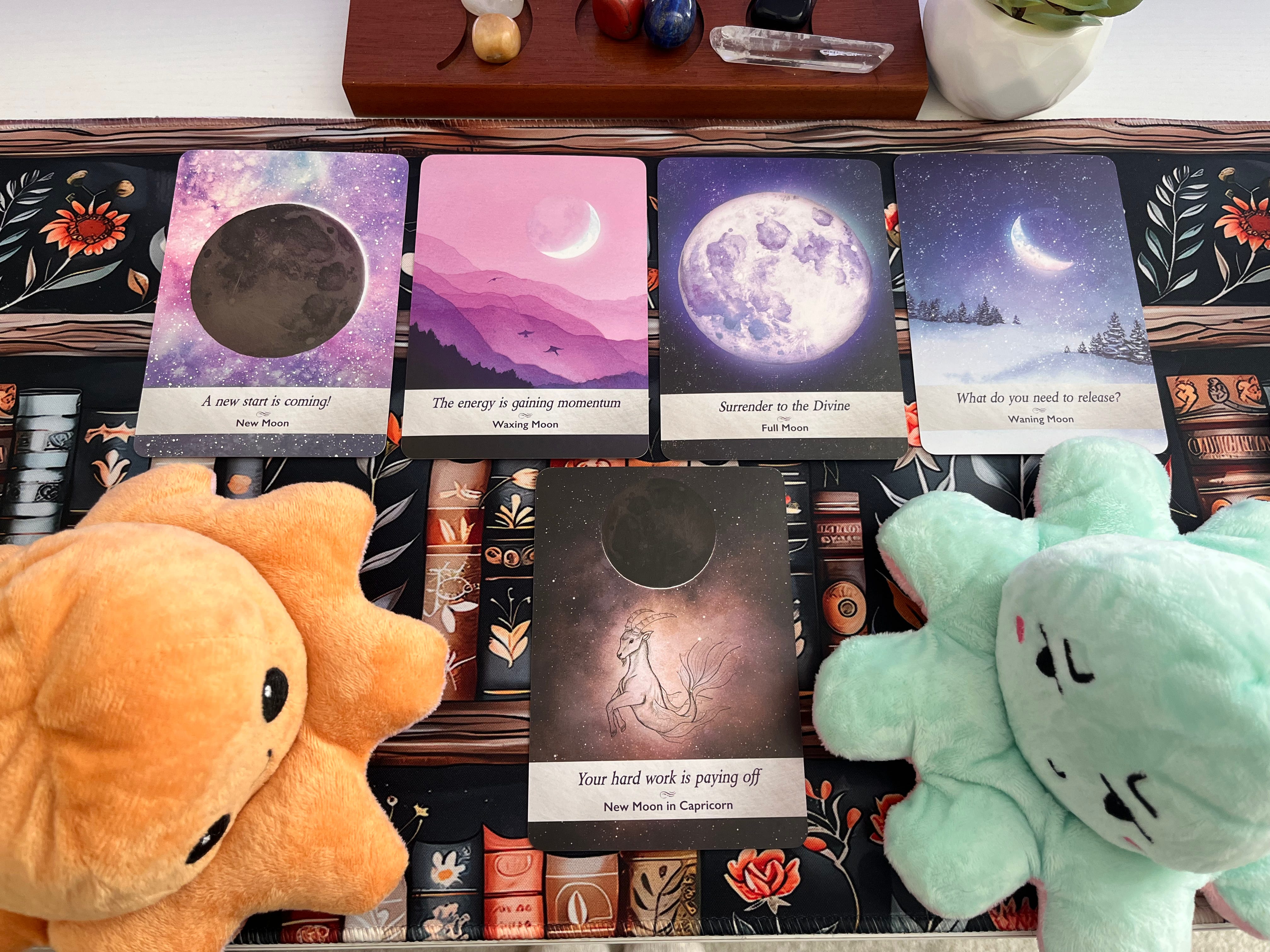
New Moon: Planting Seeds (Days 1-7)
This is when the moon disappears from the sky. The dark phase. I often call this “womb time.” In the waters, this is the time of deepest stillness before the tide begins to turn.
What’s happening energetically: You’re in the fertile void. The blank page. The moment before creation begins. Energy is gathering but hasn’t manifested yet. This is planting time.
What to write during the New Moon phase:
Start new projects or new phases of existing projects
Set intentions for the lunar cycle ahead
Brainstorm and free-write without attachment to outcome
Plant story seeds without needing them to grow yet
Journal about what you want to create
Clarify your vision (Air element work)
What NOT to do:
Force completion or polish
Compare yourself to others’ finished work
Expect immediate results
Push for public visibility
New Moon practice: Light a candle. Get a small piece of paper and write down your intention for this cycle in one sentence. Fold it, and place it under the candle (please use fire safety). Plant the seed. Let it rest in the dark soil of possibility. Then begin drafting from that intention without pressure to “finish” anything yet.
The New Moon asks: What wants to be born through your writing this cycle?
Waxing Moon: Building Energy (Days 8-14)
The moon becomes visible again and grows fuller each night. In the waters, the tide is rising. Energy increases daily.
What’s happening energetically: Momentum builds naturally. What you planted at the New Moon begins to show signs of life. Ideas expand. Drafts grow. This is the phase for adding, developing and building.
What to write during the Waxing Moon phase:
Add scenes, chapters, sections to your work in progress
Develop characters more fully
Expand research and deepen knowledge
Build your argument or narrative arc
Layer in sensory details and emotional depth
Draft new material while energy is high
Strengthen Fire element (momentum) and Water element (connection)
What NOT to do:
Cut or delete material yet
Perfect sentences
Worry about what doesn’t fit
Second-guess your direction
Waxing Moon practice: Each day, add something to your project. A paragraph. A scene. A new angle on your argument. Follow the expanding energy. Let the work grow bigger before you make it tighter.
The Waxing Moon asks: What wants to grow? What needs more space?
Full Moon: Illumination (Days 15-21)
The moon is completely visible, bright enough to cast shadows. In the waters, this is high tide — maximum energy, maximum visibility. Everything is revealed.
What’s happening energetically: You can finally see what you’ve created. The work is illuminated. This is the phase of clarity, completion and celebration. Energy peaks here.
What to write during the Full Moon phase:
Finish drafts (even if imperfect)
Complete sections or chapters
Read through your work objectively to see what’s actually there
Celebrate milestones and progress
Share work publicly if you’re ready
Submit, publish, launch
Assess your work’s elemental balance
What NOT to do:
Start brand new projects
Make major revisions immediately after completing
Harsh self-criticism during your moment of accomplishment
Full Moon practice: Print or read through what you’ve created during this part of the cycle. Really look at it. Celebrate that it exists — even if it’s messy, even if it needs work. You brought something from void into form. That’s worthy of acknowledgment.
The Full Moon asks: What have you actually created? What deserves to be seen?
Waning Moon: Releasing and Refining (Days 22-28)
The moon begins to shrink, darkness returns gradually. In the waters, the tide recedes. Energy naturally pulls back.
What’s happening energetically: This is the phase for letting go. Cutting what doesn’t serve. Releasing attachment. Making space for the next cycle. Energy decreases but wisdom increases.
What to write during the Waning Moon phase:
Edit and revise with discernment
Cut scenes, sentences, sections that don’t serve (Not sure what to cut? Go back to your one-sentence purpose statement for clarity [Air]. That’s your measuring stick.)
Let go of ideas that aren’t working
Delete, trim, tighten
Refine without adding new material
Strengthen Earth element (structure and craft)
Release projects to editors, beta readers or the world
What NOT to do:
Try to generate new material
Force expansion
Start new projects
Push through exhaustion
Waning Moon practice: Read through your work and remove one thing that’s not serving it. A paragraph, a scene, an entire subplot. Practice releasing. Trust that removing what’s unnecessary makes room for what wants to come in the next cycle.
The Waning Moon asks: What needs to be released so the next seed can be planted?
Tracking the Lunar Cycle
You don’t need an astrology app or some complicated lunar calendar. The moon is visible in the sky. Go outside and look up.
Simple tracking method: Mark New Moons and Full Moons on your calendar. (Any basic calendar app shows moon phases. Or check timeanddate.com for free.)
Then work with the general energy:
Week 1 (New Moon): Plant and begin
Week 2 (Waxing): Build and expand
Week 3 (Full Moon): Complete and illuminate
Week 4 (Waning): Release and refine
You don’t need to be precious about exact timing. If you’re in week three but you’re not done drafting, keep drafting. The moon gives you permission to honor where you actually are, not where you “should” be.
Working with Multiple Projects
Most writers have more than one project active. Here’s how to use lunar phases when you’re juggling:
New Moon: Start the newest project OR plant seeds for the next phase of a current project
Waxing Moon: Build whichever project has the most energy and momentum right now
Full Moon: Complete something, even if it’s small (a chapter, an essay, a scene)
Waning Moon: Edit/refine the project that’s closest to done OR release finished work into the world
You can have one project in expansion while another is in release. That’s natural. Different projects have different rhythms.
When You Miss a Phase
You will miss phases. You’ll be deep in drafting when the moon says “release.” You’ll feel called to edit when the moon says “expand.”
This is fine. The moon offers guidance, not commandments.
If you’re out of sync with the lunar cycle, notice it. Are you fighting your own energy? Are you trying to expand when you’re exhausted? Are you cutting when you should be building?
Sometimes the work demands what it demands regardless of what the moon is doing. But often, we’re pushing against our natural rhythm because we think we “should” be doing something different.
The moon gives you permission to work with your actual energy instead of against it.
Deeper Patterns: Seasons Within the Month
Once you work with lunar cycles for a few months, you’ll notice something: your monthly creative cycle mirrors your project’s full lifecycle.
New Moon = Beginning a book
Waxing Moon = Drafting and developing
Full Moon = Completing first draft
Waning Moon = Revision and refinement
Then the cycle begins again with a new project or new phase.
No, it’s not a coincidence. There are no coincidences. This is pattern. The same pattern that governs the ocean’s tides, the seasons of the year, the process of transformation itself.
Plant. Grow. Harvest. Release. Repeat.
When you honor this rhythm in your monthly practice, you’re training yourself to trust it in your larger work too.
Sacred Creative Practice
Working with the moon reconnects writing to its roots as sacred practice.
Before productivity culture, before content calendars, before “consistent output,” humans created in relationship with natural cycles. We planted with the seasons. We celebrated harvests. We rested in winter.
Your writing doesn’t need to be optimized for algorithm-friendly “consistency.” It needs to be rooted in rhythm that’s older than capitalism, older than publishing deadlines, older than your anxiety about being “productive enough.”
The waters know when to rise and fall. The moon knows when to disappear and when to shine.
You know too. You’ve just been taught to ignore it.
Your Next New Moon
The next New Moon is January 18, 2026. It’s in Capricorn (my sun sign) — the sign of building things that last, of patient mastery, of creating structures that can hold your vision.
Here’s what to do:
On or near January 18:
Light a candle if that feels right
Ask yourself: What wants to begin this cycle?
Write your intention in one sentence
Plant that seed by starting — a single page, a rough outline, a messy first paragraph
Then let it rest
For the next 28 days:
Week 1 (Jan 18-24): Plant and begin
Week 2 (Jan 25-31): Build and expand
Week 3 (Feb 1-7): Complete and illuminate
Week 4 (Feb 8-14): Release and refine
At the next New Moon (February 17): Notice what happened. Did you honor the rhythm? Did you fight it? What did you learn about your natural creative flow?
Then begin again.
The Wisdom the Waters Teach
Working with lunar rhythms has taught me quite a bit about writing.
Creation isn’t linear. It’s cyclical.
Rest isn’t laziness. It’s preparation for the next wave.
Releasing is as important as building. Making space matters as much as filling it.
Your creative energy has seasons within every month. When you honor them instead of forcing constant high tide, you stop burning out. You finish more work with less exhaustion. You build a sustainable practice that feeds you instead of depleting you.
The moon rises whether you acknowledge it or not. The tides turn whether you resist or flow with them.
Your writing practice can fight the current or learn to ride the waves.
The deep waters are patient. They’ll wait for you to remember the rhythm.
Start here: Mark the next New Moon on your calendar. Set one intention. Plant one seed. See what wants to grow when you stop forcing and start flowing.
The Temple Library is here when you’re ready to go deeper.

I love that you’re a Cap cause I am too! Loved this post cause it reminded me to go easy on myself, especially since the moon is in its waning phase. So thanks for this fantastic post!