

Black writers are writing in every genre. So why does the industry still act surprised?
Black writers have been in every genre since 1962. The publishing industry keeps acting like they just arrived.

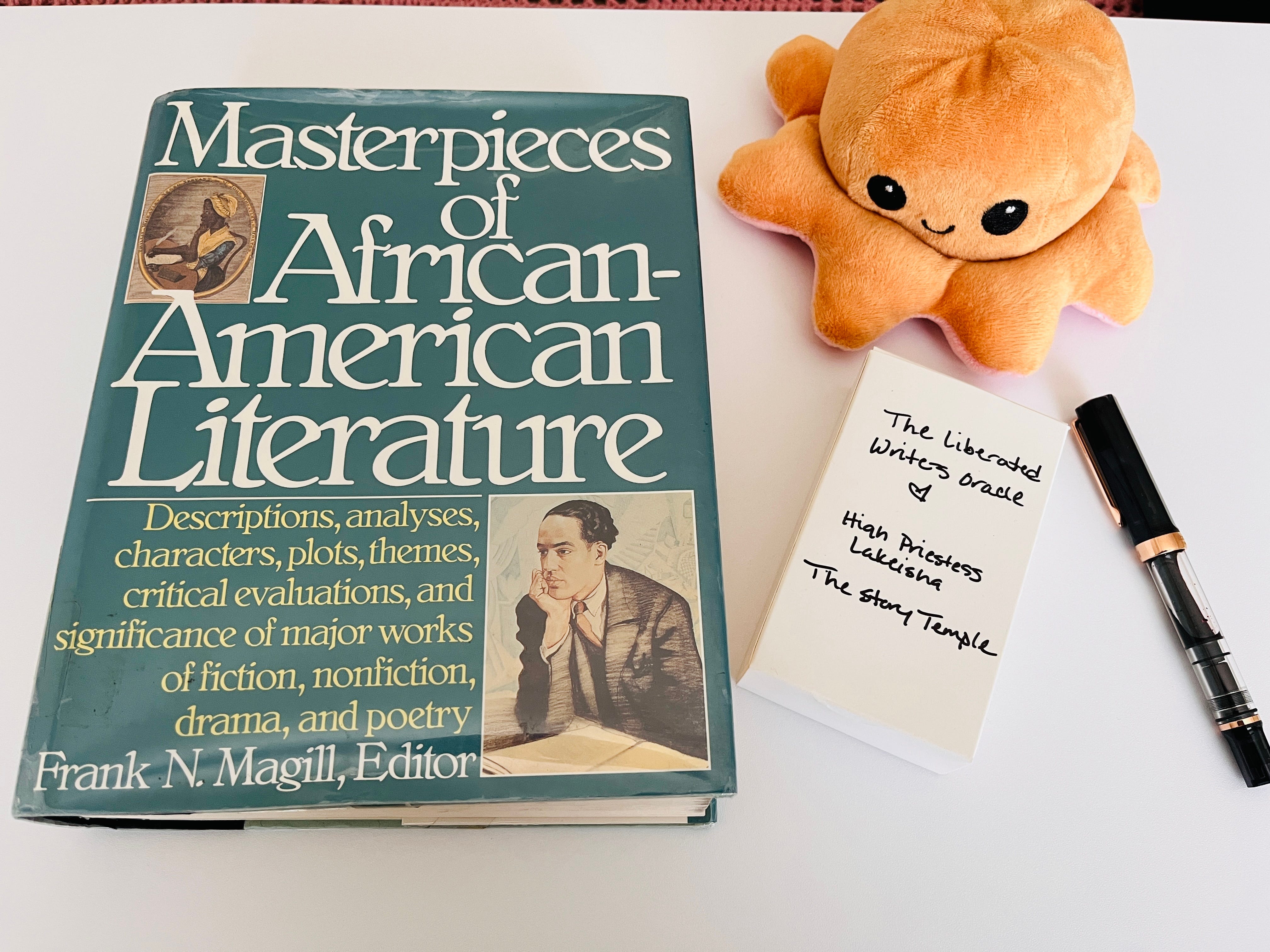
In 2026, there are over 144 Black-authored books tracked across every major genre: historical fantasy, sci-fi, romance, horror, Southern gothic, literary fiction, biography, cozy mystery. Black writers are writing pirates, space races, hip-hop dramas, neurodivergent family stories, and multigenerational epics. They’ve been doing this for decades. They’ve never stopped.
And yet.
Every few months, a review, a panel, or some publisher announcement uses the phrase “expanding the range of Black storytelling” as though the range were new. As though it had been waiting for permission. As though the surprise were genuine.
It isn’t.
The industry’s surprise isn’t a discovery. It’s a posture. And postures serve a purpose.
The evidence of range isn’t subtle. Percival Everett’s James won the 2025 Pulitzer Prize for Fiction and the National Book Award. N.K. Jemisin won three consecutive Best Novel Hugos for the Broken Earth trilogy, a feat no one before or since has matched. Nnedi Okorafor published Death of the Author in 2025. Stacey Abrams is on her third thriller. Nicola Yoon is writing dystopian horror. The inaugural Atlanta Black Romance Book Festival in 2025 showcased every romance subgenre: paranormal, fantasy, queer, sports, historical, erotica, and inspirational, all in one room.
Eugen Bacon’s anthology Afro-Centered Futurisms in Our Speculative Fiction won both the 2025 Ignyte Award for Creative Nonfiction and the 2025 Locus Award. Africanfuturism,1 the literary movement Nnedi Okorafor defined formally in 2019, keeps producing major award winners. It’s not emerging. It’s been arrived.
The breadth isn’t new. The tracking of it is what’s new. And only barely.
The industry acts surprised because it’s structured to be surprised.
According to the Lee & Low Diversity Baseline Survey 2023, released in February 2024,2 72.5% of the U.S. publishing workforce identifies as white. Among executives, it’s 76.7%. Black employees represent 5.3% of the total workforce, a number that has held essentially flat across all three Lee & Low surveys.3 When the people controlling acquisitions, marketing budgets, and front-table placement overwhelmingly share one cultural vantage point, the range of Black storytelling becomes invisible. And the people with the power to invest in it are not, by and large, the people reading it.
Regina Brooks named the acquisitions filter directly: “If you know there’s an audience for a book and you know the book is going to sell — but it’s not something you would pick up and read — would you acquire that book?”4
#PublishingPaidMe is the clearest receipt for what that structure costs. Roxane Gay received $12,500 for An Untamed State and $15,000 for Bad Feminist. N.K. Jemisin received $25,000 per book for the Broken Earth trilogy, the same trilogy that won three consecutive Hugos.5 Jesmyn Ward had to fight, after winning the National Book Award, to get $100,000 for her next novel.6 Kiese Laymon paid ten times what his publisher had originally paid him to buy back the rights to two of his books.7
Lydia Kiesling received $200,000 for her debut novel. Lacy Johnson received $215,000 for her essay collection.8 These are the baseline for how the industry prices work it has already decided matters.
N.K. Jemisin named the mechanism: “Advances indicate what the publishing industry thinks readers will like in the future. In a racist industry trying to sell books to a racist public within a racist society? Implicit bias alone will make negotiations harder.” She called it “Lots of little biases at many points forming a big racist Voltron.”
Then came 2020. After George Floyd’s death, every major publisher issued statements. Black editors were hired into visible roles: Lisa Lucas as publisher of Pantheon and Schocken at Penguin Random House, Tracy Sherrod at Little, Brown, Dana Canedy as publisher of the Simon & Schuster flagship. DEI commitments were announced. Numbers were promised.
By May 2024, Lucas and Sherrod had both been dismissed or laid off.9 Canedy had departed in 2022. Researchers Dan Sinykin and Richard Jean So found that between 2019 and 2023, novels by Black authors rose from 4% to 9% of Big Four output, then named exactly what the industry does next: “Publishers announce the acquisitions with fanfare. But publishers then fail to provide adequate investment in marketing, publicity, and sales; the titles underperform and, set up to fail, provide publishers with an excuse to disinvest.”
Print unit sales of books by Black authors fell 14% in 2025 compared to 2024.10 Black writers are writing more. The industry is supporting it less.
The surprise isn’t neutral. It does something specific.
It positions Black writers as newcomers to genres they’ve occupied for decades. Samuel R. Delany debuted in science fiction in 1962. Octavia Butler published her first novel in 1976 and became the first sci-fi writer to receive a MacArthur Fellowship in 1995. Charles R. Saunders coined “Sword and Soul,” an African-rooted heroic fantasy subgenre, in 1981.11 Jemisin has spoken about being told as a child that “Black women don’t write science fiction,” and about The Killing Moon being rejected for being “too Black.”12 Sixty-plus years of documented range. The industry still reaches for “surprising.”
The surprise reframes the industry’s failure to invest as a discovery to celebrate. It allows gatekeepers to take credit for recognizing what was never lost. It keeps the bar of proof permanently higher: a Black writer can’t simply write a great fantasy novel. They must write the one that finally “proves” Black writers can do this. As L.L. McKinney put it: “when our books flop or fail, it’s seen as a reflection on all Black storytelling instead of just that one book.”13 Then the clock resets.
Toni Morrison said it plainly: “If you can only be tall because someone is on their knees, then you have a serious problem.”14 The industry’s surprise requires Black writers to remain perpetually emerging, never arrived, and always having to demonstrate range anew.
Black writers were always in every genre. The industry is being forced, slowly and selectively, to look at what was already in front of it.
The surprise is the tax. Black writers have been paying it for sixty years: re-proving range that was already documented, fighting for investment that was always deserved, and entering genres they never left.
The range was never missing. Only the recognition.
If you’ve been writing in the genre you love and something still feels like it’s being decided for you, that’s what we look at next.
Nnedi Okorafor began using “Africanfuturism” around 2018 and defined it formally in “Africanfuturism Defined,” October 2019.
Lee & Low Books, Diversity Baseline Survey 2023 (DBS 3.0), released February 29, 2024. Full data at leeandlow.com/about/diversity-baseline-survey/dbs3/
Ibid. Lee & Low DBS 3.0 does not publish an isolated Black percentage per editorial or executive tier separately; the white-share figures are the gatekeeping metric reported directly in the survey.
Regina Brooks, founder of Serendipity Literary Agency, quoted in Dan Sinykin and Richard Jean So, “Has the DEI Backlash Come for Publishing?” The Atlantic, June 19, 2024.
#PublishingPaidMe advance figures are author self-disclosures posted June 6, 2020. All figures are advances against royalties, not total earnings. Corroborated by PBS NewsHour, “Black Authors Share Their Advances Under #PublishingPaidMe,” June 11, 2020 (pbs.org), and The Bookseller.
Jesmyn Ward, #PublishingPaidMe disclosure, June 6, 2020, corroborated by PBS NewsHour (pbs.org, June 11, 2020). The $100,000 figure refers to her advance for Sing, Unburied, Sing (Scribner, 2017), her first novel after winning the National Book Award for Salvage the Bones (2011); her advance for Salvage the Bones was approximately $20,000.
Kiese Laymon, “Why I Paid Tenfold to Buy Back the Rights for Two of My Books,” Literary Hub, November 10, 2020.
Lydia Kiesling, #PublishingPaidMe disclosure, June 6, 2020, corroborated by BuzzFeed News (archived at web.archive.org). Lacy Johnson’s $215,000 for The Reckonings (Scribner) documented by BuzzFeed News (single outlet; BuzzFeed News shut down April 2023; archived at web.archive.org). Both figures are advances, not total earnings.
Lisa Lucas departure from Penguin Random House: Publishers Weekly, May 2024. Tracy Sherrod departure from Little, Brown: corroborated by multiple trade sources, May 2024. Dana Canedy departure from Simon & Schuster flagship: 2022. Dan Sinykin and Richard Jean So, “Has the DEI Backlash Come for Publishing?” The Atlantic, June 19, 2024. NOTE: The Sinykin-So study covers four of the Big Five publishers (excluding Hachette) and fiction titles only; the output figures (4% to 9% of Big Four acquisition output between 2019 and 2023) represent the authors’ analysis of that subset, not an industry-wide consensus figure.
AALBC (African American Literature Book Club), via Circana BookScan data, reported by Publishers Weekly: “Percival Everett Was the Bestselling Black Author in 2025.” NOTE: The 14% figure covers U.S. print unit sales only. It does not include digital, audio, or total book output. AALBC identifies Black authors using a combination of BISAC subject codes and manual research; Circana BookScan covers print sales from thousands of U.S. retailers.
Samuel R. Delany, The Jewels of Aptor (Ace Books, 1962), published when Delany was approximately 19–20 years old; four Nebula Awards, two Hugo Awards; inducted into the SF & Fantasy Hall of Fame (2002). Delany described Octavia Butler as “the second” known African American SF writer to come up through the commercial genre. Octavia E. Butler, Patternmaster (Doubleday, 1976); first science-fiction writer to receive a MacArthur Fellowship, 1995; multiple Hugo, Nebula, and Locus awards. Charles R. Saunders coined “Sword and Soul,” the African-rooted heroic-fantasy subgenre; Imaro published by DAW Books, 1981 (stories first appeared in the 1970s fanzine Dark Fantasy and Lin Carter’s 1975 Year’s Best Fantasy Stories).
N.K. Jemisin, “How Long ‘Til Black Future Month?” September 2013. The “too Black” rejection account is documented in multiple interviews; Jemisin’s 2018 WorldCon Guest of Honor speech is the most frequently cited source for that specific account.
L.L. McKinney, quoted in PBS NewsHour, “Black Authors Share Their Advances Under #PublishingPaidMe,” June 11, 2020 (pbs.org), and in NPR coverage of #PublishingPaidMe, June 2020.
Toni Morrison, The Pieces I Am, dir. Timothy Greenfield-Sanders, Magnolia Pictures, 2019. Full quotation: “If you can only be tall because somebody is on their knees, then you have a serious problem.”